This comprehensive guide covers are the different types solutions for industrial and OEM applications. ToneCooling provides expert insights on are the different types technology and implementation.

Types of Liquid Cooling Plates — Are the different types
Embedded Tube Cooling Plates — Are the different types
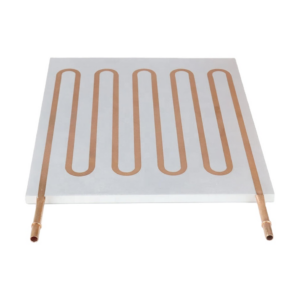
Embedded tube liquid cold plates use tubes made of copper or stainless steel pressed into an aluminum or copper plate. The tubes are fitted tightly or bonded with thermal epoxy to remove air gaps. Coolant flows through the tubes, absorbing heat from the plate and carrying it away. This design creates a joint-free system that improves reliability and heat transfer.
- These liquid cooling plates are common in high-performance computing, electric vehicles, aerospace, and medical equipment.
- They offer good thermal performance and are easy to manufacture.
- Embedded tube cold plates work well for both passive cold plates and active cold plates.
Extruded Cooling Plates
Extruded liquid cold plates are made by pushing aluminum through a shaped die to form channels and fins. This process allows for tall, thin fins and complex shapes that maximize heat dissipation in limited space.
- The extrusion method supports fast prototyping and reduces machining costs.
- Extruded liquid cooling plates can be customized for different thermal needs and package sizes.
- When combined with friction stir welding, extruded plates achieve strong, leak-proof joints.
- These plates are cost-effective and common in mass production for high-performance applications.
Bonded Fin Cooling Plates
Bonded fin liquid cold plates have internal fin structures bonded to the base plate. The fins increase the contact area between the coolant and the metal, improving heat transfer.
- Fins also help mix the fluid and keep temperatures even across the plate.
- Bonded fin designs lower maximum temperatures and pressure drops compared to finless plates.
- These liquid cold plates are used in electronics cooling and other high-performance applications where uniform temperature is important.
Microchannel Cooling Plates
Microchannel cold plates use many small channels, often less than a millimeter wide, to guide coolant through the plate. The high density of channels provides a large surface area for heat transfer.
- Microchannel liquid cold plates offer very low thermal resistance and can cool high heat fluxes at low flow rates.
- These plates are compact and lightweight, making them ideal for mobile and airborne electronics.
- Typical flow rates range from 0.5 to 2.5 liters per minute, with low pressure drops.
- Microchannel cold plates are widely used in high-performance computing, power electronics, and advanced medical devices.
Composite Cooling Plates
Composite liquid cold plates combine different materials to optimize both thermal and mechanical properties. Some designs use phase change materials (PCM) with minichannels to manage temperature spikes.
- The PCM melts at a set temperature, absorbing excess heat and protecting sensitive components.
- Adjusting wall thickness and graphite content improves both heat conduction and strength.
- Composite liquid cooling plates are popular in battery systems and environments with changing temperatures.
Friction Stir Welded (FSW) Cooling Plates
Friction stir welded liquid cold plates use a solid-state welding process to join metal parts without melting them. This creates smooth, defect-free joints that are strong and leak-proof.
- FSW allows for larger flow channels, improving heat dissipation.
- The process maintains the strength of the base materials and avoids thermal distortion.
- FSW liquid cooling plates are durable and reliable, making them suitable for high-performance applications in automotive, aerospace, and electronics.
Vacuum Brazed Cooling Plates
Vacuum brazed liquid cold plates use a vacuum furnace to join metal parts with a filler metal, creating seamless, leak-proof bonds.
- These plates are reliable and durable, with high resistance to pressure and temperature.
- Materials like stainless steel and nickel alloys provide corrosion resistance.
- Vacuum brazed liquid cooling plates are used in aerospace, automotive, electronics, and medical fields where reliability is critical.
Embedded Pipe
Embedded pipe liquid cold plates are similar to embedded tube designs but may use different pipe shapes or materials. The pipes are pressed or bonded into the plate, forming channels for coolant flow.
- This design offers good thermal performance and is easy to manufacture.
- Embedded pipe liquid cooling plates are used in electronics and industrial cooling.

Fin Designs in Cooling Plates
Cooling plates use different fin designs to improve heat transfer. The shape and arrangement of fins affect how well a cooling plate works. Researchers have tested many fin types to find the best balance between heat transfer and pressure drop. Submerged fin cold plates often use these designs to boost performance in demanding applications.
Louvered
Louvered fins have small, angled cuts along the fin surface. These cuts guide the coolant flow and break up boundary layers. This design increases turbulence, which helps move heat away from the plate faster. Louvered fins show slightly lower thermal performance than straight fins but offer better results when considering size, weight, and cost. Submerged fin cold plates with louvered fins work well in compact systems where space is limited.
Lanced Offset
Lanced offset fins use a staggered pattern with slits or holes punched into the fins. This pattern forces the coolant to change direction, mixing the fluid and improving heat transfer. Lanced offset fins rank moderate in both pressure drop and thermal performance. Submerged fin cold plates with this design provide a good balance for systems that need steady cooling without high flow resistance.
Straight
Straight fins run parallel to the coolant flow. They create simple channels that allow coolant to pass with minimal resistance. Straight fins deliver the best heat transfer per unit of pressure drop. This makes them ideal for submerged fin cold plates where low pressure drop is important. Straight fins also make manufacturing easier and reduce costs.
Wavy
Wavy fins have a sinusoidal or curved shape. This design increases the surface area and creates more contact between the coolant and the metal. Wavy fins improve heat transfer compared to straight fins, but they also cause a higher pressure drop. Submerged fin cold plates with wavy fins suit applications where extra cooling is needed, and higher flow resistance is acceptable. Studies show that wavy fins can reduce weight and create more mixing in the coolant, which helps remove heat quickly.
How to Choose the Best Cooling Plate
Material Selection
Selecting the right cooling plate depends on understanding the differences between types. The table below compares common liquid cooling plates by materials. Aluminum plates offer the best balance of cost and heat dissipation efficiency. Copper plates provide high thermal performance but cost more. Polymer and graphite plates have variable results and are less common in thermal management systems.
| Cooling Plate Type | Cost Aspect | Performance Aspect |
|---|---|---|
| Aluminum | Lowest material cost | Best balance of cooling efficiency and energy use |
| Copper | Higher cost than aluminum | Good cooling, less cost-effective |
| Graphite | Moderate cost | Variable, less efficient than aluminum |
| Polymer | Variable, often higher | Lower cooling efficiency compared to metals |
Engineers should match the cooling plate to the needs of the thermal management system. For high thermal performance, copper or advanced aluminum plates work best. When cost matters most, aluminum with a serpentine channel is a smart choice. In tight spaces, select a plate with a compact design and good thermal interface material. For large production, choose a plate type that supports fast manufacturing and easy integration into thermal management systems.
Key Criteria
When selecting a cooling plate for any cooling solutions or thermal management system, consider these factors:
- Thermal performance: flow balancing, temperature uniformity, and maximum temperature handling.
- Material and fluid compatibility: options include aluminum, copper, stainless steel, and various coolants.
- Flow configuration: serpentine tube, manifold, mini channel, or micro channel.
- Pressure drop: design affects flow stability and efficient cooling solution.
- Size and weight: match the application’s space and weight limits.
- Cost: includes both manufacturing and operating costs.
- Corrosion resistance: coatings can improve durability.
- System integration: ensure compatibility with pumps, heat exchangers, and liquid lines.
- Thermal interface material: critical for transferring heat between the plate and components.
A good thermal management system uses the right thermal interface material and plate design to achieve efficient heat dissipation and reliable operation.

Applications of Cooling Plates
Electric Vehicles
Cooling plates play a vital role in electric vehicles. They help control the temperature of the electric vehicle battery, which improves safety and extends battery life. Engineers use cooling plates to manage heat in power electronics like inverters and converters. These plates also cool electric motors by removing heat from the windings. Some systems use integrated cooling plates to handle several components at once, making the whole vehicle more efficient.
Key requirements for cooling plates in electric vehicles include compact and lightweight design, high heat transfer efficiency, and low pressure drop. The plates must work with different coolants and resist vibration. Uniform temperature distribution is important to avoid hotspots in the electric vehicle battery.
Most cooling plates use aluminum or copper alloys for good thermal conductivity and low weight. Engineers often choose microchannel designs to boost heat transfer in the electric vehicle battery. The right plate thickness and channel layout help balance cooling and weight.
Electronics
Electronics rely on cooling plates to keep devices from overheating. Liquid-cooled cold plates are common in high-performance applications like data centers and advanced computing. These plates use direct-to-chip or immersion cooling to remove heat from processors and chips. Some systems combine cold plates with phase change materials to handle sudden spikes in temperature. This setup can lower device temperatures and reduce energy use.
Recent trends show a move from air cooling to liquid cooling in electronics. New materials like graphene-based thermal interface materials improve heat transfer. AI-driven systems now help predict and adjust cooling in real time. These advances help electronics run faster and last longer.
Industrial Equipment
Industrial equipment uses cooling plates to manage heat in sectors such as aerospace, energy, and manufacturing. The plates move coolant through channels to absorb and remove heat from batteries, power electronics, and processors. Cooling plates help keep machines safe and running smoothly under tough conditions.
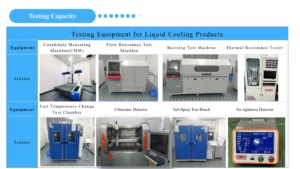
Manufacturers design cooling plates to handle high heat loads and mechanical stress. They use strong materials and advanced joining methods like welding and brazing. Cooling plates also help control temperature during processes like curing polymers and adhesives. Regular testing ensures the plates meet strict industrial standards.
Conclusion
Liquid cooling plates offer effective heat management in high-performance systems where air cooling falls short. With various types—like embedded tube, microchannel, and friction stir welded designs—engineers can select the right plate based on performance, size, material, and cost.
Whether it’s electric vehicles, electronics, or industrial machinery, choosing the right cooling plate enhances system stability, efficiency, and lifespan. By understanding how each type works and where it excels, manufacturers can build more reliable and thermally optimized systems across multiple industries.
For industry standards and best practices, refer to ASHRAE thermal guidelines.
Frequently Asked Questions
Does ToneCooling offer OEM and ODM services?
Yes. ToneCooling provides full OEM and ODM services including custom design, prototyping, thermal simulation, and volume production. We serve customers in North America, Europe, and Asia-Pacific with engineering support and samples within 6–8 weeks.
What industries does ToneCooling serve?
ToneCooling serves data center, telecommunications, EV/automotive, power electronics, aerospace, medical devices, and industrial laser markets with custom thermal management solutions.
How can I get a quote from ToneCooling?
Visit tonecooling.com/contact or email info@tonecooling.com with your thermal requirements. ToneCooling responds to all inquiries within 24 business hours.
Get a Custom Thermal Solution from ToneCooling
ToneCooling is a professional liquid cooling solution provider specializing in custom cold plates, AIO coolers, and advanced thermal management systems. With ISO 9001:2015 certified manufacturing, we deliver prototype samples within 6–8 weeks. Contact ToneCooling today for a free consultation and quote — we respond within 24 business hours.
Why Choose ToneCooling for Semiconductor Test Fixture Cold Plate
Engineering review and prototype planning are based on the project requirements. Custom prototype lead time is normally 6–8 weeks after drawing approval and order confirmation; confirm the production schedule in the quotation.
Last Updated: 2026-04-08
Need a custom different types cooling plates solution?
ToneCooling engineers respond within 24 hours with CFD-validated thermal recommendations.